
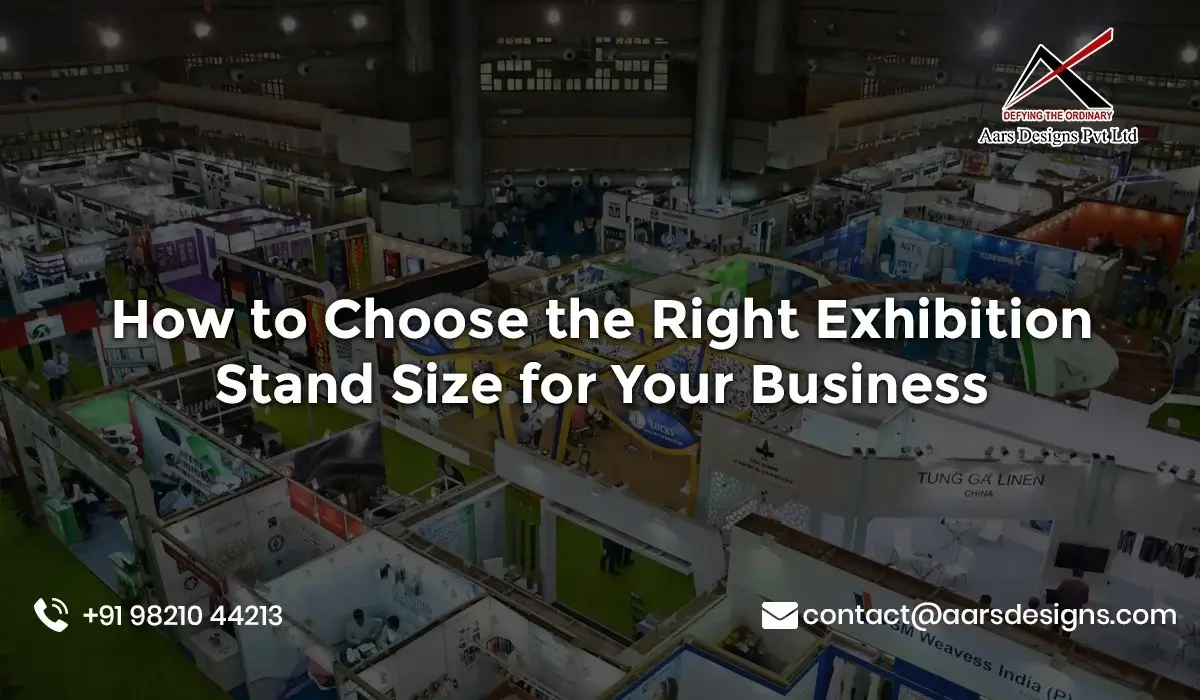
When selecting the Exhibition Stand Dimensions, it is not just a matter of buying floor space; it’s a decision. The space should be able to accommodate products, demonstrations, meetings, storage, staffing, branding, and traffic from visitors and not cost them any money. A small stand can make a big impact when goals are clear, and a large stand can be uninviting and unaffordable if planning is too general. Space selection should be when it comes to goals of the event, how many people will attend, the presentation needs, as well as the buyer journey. This little guide is designed to help businesses consider some of the possibilities before considering booking the space for an exhibition.
Start With Clear Exhibition Objectives
The Booth Size for an Exhibition will depend firstly on the business’s goals. Spatial priorities vary with different types of events like lead generation, product launch, distributor meeting, live demo or hospitality. Identify activities before comparing floor plans, as the engagement process will need to be accommodated on the stand.
- Establish measurable goals for leads, meetings, demonstrations and sales opportunities.
- Name all products, screens, counters, storage locations and meeting places.
- Estimate the number of visitors that can be expected during the peak hours during scheduled exhibitions.
Match Stand Dimensions With Products and Demonstrations
- Measure products such as doors, cables, barriers and operating clearance.
- Set up safe vantage points for demonstrations, equipment and interactive installations.
- Secure off-site literature, packaging, refreshments and employee items.
Compare Standard Exhibition Stand Sizes Carefully
- For more targeted messaging and engagement with visitors, opt for inline stands.
- When 2 sides are open, and aisles enhance better visibility, choose corners for the booth.
- Think of using island stands for high-traffic areas, launches and panoramic branding.
Plan Visitor Flow Through the Exhibition Stand Layout
- Do not move counters in front of entrances, and keep entrances clear.
- Place key demonstrations so that there is no congestion for the passer-by.
- Use different forms of enquiry for different durations that need greater concentration and privacy.
Balance Budget, Location, and Visibility
- Work on space, build, transportation, services, staffing, utilities and dismantling simultaneously.
- Check entrances to the review hall, nearby exhibits, columns, exits and traffic flow.
- Spend money on graphics, lighting, demos and booth staff.
Choose Flexibility for Multiple Exhibitions
- Use modular elements that can fit many different floor space bookings without requiring too much space.
- Create graphics that can be used in various widths, heights and orientations.
- If possible, opt for the same counters, lighting, screens, furniture and storage devices around the world.
Select the Right Exhibition Stand Size With AARS Designs
AARS Designs can assist exhibitors in taking their commercial goals and transforming them into a viable space brief, effective layout and build-ready concept. We analyse the products, audience behaviour, staffing, demonstrations, storage, venue regulations and budget before deciding on the Exhibition Stand Size that should be recommended. We then design and build a stand with maximum use of all the square metres.
- Get customising planning that is goal-, product-, visitor-, and budget-oriented.
- Design efficient layouts to promote visibility, movement, meetings, demonstrations and hospitality.
- Design, produce, install, supervise, dismantle, organise and co-ordinate projects.
When working with AARS Designs, exhibitors have one partner whom they can trust from initial planning to on-site delivery. Compact, modular, custom-built, peninsula or island, the requirement is matched with form, function and brand elements to ensure the best fit with the selected floor space.
