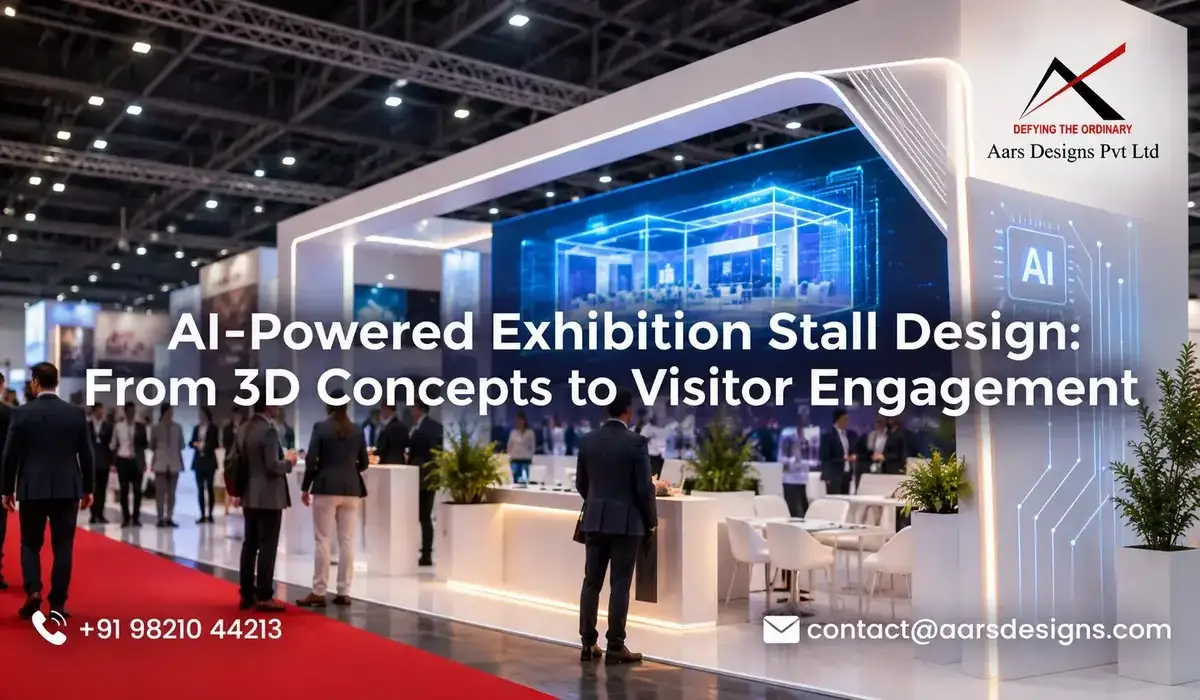
Introduction to AI in the Exhibition Industry
A sales-failing commercial is a striking stall where visitors are unable to see any products or contact sales staff. The use of AI in the Exhibition Industry goes beyond fancy screens now. Exhibitors learn about concept development, routing visitors, personalised demonstrations and sales follow-up. The focus is on making these more relevant conversations measurable. This is where AI comes in handy, and expert knowledge is still needed.
What Is AI-Powered Exhibition Stall Design?
AI Exhibition Stall Design is a combination of generative modelling, data analysis, interactive technologies and traditional stand planning. Teams assess ideas, plans and visitor experience prior to creation. This could include product recommendations, multilingual support, or lead qualification, among other elements, in an AI-Powered Exhibition Stand. But an AI-generated image is not a technical drawing. Concepts must be properly sized, have structural calculations, electrical systems, materials and venue approval.
5 Ways AI Is Transforming Exhibition Stall Design
1. AI-Based 3D Design and Visualisation
Based on brand briefs, product size, and audience profiles, AI Tools for Exhibition Design provide directions. Successful concepts are converted by the designers into a 3D Exhibition Stall Design with counters, lighting, signage and demonstrations. Virtual walkthroughs assist stakeholders to take a ‘look’ at sightlines before choosing materials. This helps to minimise the ambiguity in the approval process, but specialist checks are still necessary for production drawings.
2. Smart Space Planning
Exhibitors who are operating machinery can’t get to demonstrations safely at their entrances. Smart Exhibition Stall Design is based on anticipated traffic, size of displays, and staffing needs to determine circulation. Priorities include:
3. Interactive Displays and Visitor Engagement
AI Visitor Engagement is best suited to respond to a visitor’s question. A touchscreen might be able to match purchases to suitable equipment with regard to capacity, application or operating requirements. There is a multilingual assistant that can clarify the specifications, and the representatives of the booths can make detailed negotiations. Thoughtworks reported in 2026 that AI matchmaking is assisting visitors at some events to identify the exhibitor that’s relevant to them, focusing on providing them with useful recommendations.
4. AI-Powered Lead Capture
AI Lead Generation for Exhibitions can help tie in consent-based badge scan information, meeting notes and product interests with a customer relationship management system. Sales teams document applications discussed, timeline of purchasing and next steps. Scores might be suggested by AI, but should be confirmed by staff to ensure that they have appropriate buying authority and commercial intent.
5. Visitor Behaviour and Performance Analytics
Interaction data and the number of people present can help to predict which demonstrations garner attention with privacy protection. Compare and evaluate qualified conversations, rather than the number of people who walked through the door, or the outcomes of the follow-up. The next revision of layout should be based on analytics, rather than customer feedback.
How AI Helps Exhibitors Before, During and After an Exhibition
AI Exhibition Design brings the activities throughout the event lifecycle together:
Give assignments before opening. Marketing – Messaging, Sales – Qualifications, Operations – Hardware and backups.
Benefits and Limitations of AI in Exhibition Design
AI can accelerate the initial visual exploration, aid multilingual communication and organise leads. It is based on accurate information, appropriate interactions and staff. Vague input equals shoddy concepts. There are also potential risks like incorrect information being provided by unchecked chatbots, or too many screens blocking products or filling aisles.
Ensure that you have a budget for licensing, integration, maintenance and staff training in addition to Exhibition Stall Fabrication. Put in place the necessary consent for personal data, limit the collection of personal data and offer a human alternative if electronics are not working. It’s possible an effective solution will be one that is centred mainly on a single product finder, instead of a costly tech demo.
Why Professional Expertise Still Matters in AI-Powered Stall Design
There are limitations that can’t be approved by constraint software: Loading limits, Fire regulations, Ceiling height, Rigging, Material performance and Venue deadlines are all examples of limitations that must be approved by the trade show construction professional. Product handling and storage considerations, the visibility of the product and meeting privacy concerns are also important design considerations that designers must take into account.
Attractive AI concepts are realised as practical drawings, production planning and structures which can be installed. Savvy fabricators evaluate joins, finishes, access for services and dismantling. Where there is a balance to be struck between the impact of the display, budget, safety and commercial objectives, human judgment is still essential.
The Future of AI in Exhibitions
Product guides will be more context-aware, connected analytics and personalised demonstrations will be showcased as exhibitors demonstrate use cases. The stronger direction is integration, that is, the interactions of visitors with the stand informing the sales conversation; the results of the interactions shaping the next stand design. As a company, try out some measurable applications and build on their technology budgets based on those.
Create Your Next Exhibition Stall with AARS Designs
AARS Designs, which has a wealth of industry experience and more than 3,700 exhibition projects, can offer custom, modular and double-decker stands. Its services include 3D concepts, technical planning, fabrication, installation and dismantling in India and International markets. Discuss your exhibition with AARS Designs about your brief, target and engagement goals to scope out a stand that you can build that will facilitate effective buyer conversations.
Frequently Asked Questions